Zambian women are called by their oldest sons name.
To show your wealth you usually have a cow, bike, radio, or television.
Thursday, June 13, 2013

Laos Fun Facts
Laos is the worlds most bombed country.
A groom typically gives a gift to his bride’s parents to thank them for raising her properly.
After giving birth women lay in a bed that is on top of hot coals for a month.
A groom typically gives a gift to his bride’s parents to thank them for raising her properly.
After giving birth women lay in a bed that is on top of hot coals for a month.
Work Cited
"Brazil Culture." Brazil Culture. N.p., n.d. Web. 13 June 2013.
"Subscriber Area Only." CultureGrams Online Database:. N.p., n.d. Web. 13 June 2013.
"Central Intelligence Agency." CIA. N.p., n.d. Web. 13 June 2013.
"History of Brazil." History of Brazil. N.p., n.d. Web. 13 June 2013.
"Subscriber Area Only." CultureGrams Online Database:. N.p., n.d. Web. 13 June 2013.
Zambia's Global Relationships
Zambia is members of 44 international organizations, some of the most popular are the United Nations, World Trade Organization, and the African Union. Denmark and Zambia have a good relationship because they both have embassy's in each country. Zambia is allies with the United States, Tanzania, South Africa, Russia, Ireland, Finland, and Denmark. Also, the United States has an embassy in Zambia.
Zambia's People and Their Environment
There are many problems in Zambia, one of which is air pollution.
Air pollution is a problem because it can cause disease and eventually shorten peoples life spans. Another problem is chemical runoff into drinking water. This is a huge problem because if the drinking water is contaminated then it can be very harmful. Poaching is another problem because it kills off many species like elephants, rhinos, antelope, and large cats. Possibly one of the worst problems is deforestation, this is a concern because it destroys animal habitats and can destroy peoples homes. Zambia really needs to solve all these problems if they want people to have a healthy life.

Air pollution is a problem because it can cause disease and eventually shorten peoples life spans. Another problem is chemical runoff into drinking water. This is a huge problem because if the drinking water is contaminated then it can be very harmful. Poaching is another problem because it kills off many species like elephants, rhinos, antelope, and large cats. Possibly one of the worst problems is deforestation, this is a concern because it destroys animal habitats and can destroy peoples homes. Zambia really needs to solve all these problems if they want people to have a healthy life.

Zambia's Economy
Copper is the backbone of the Zambian economy, if it wasn’t for Copper then there would be no economy. Copper accounts for 90 percent of their exports, and ever since the price of copper increased there has been more mining going on. Even though Copper is the main industry in Zambia, agriculture employs way more then mining. Corruption of government officials has always been a problem in Zambia.
Roads are what connect the country together, most of which are unpaved. A normal person in Zambia usually gets places by walking and or hitchhiking. Although there is buses, cars, and trucks you have to pay a good amount of money to the driver. It’s not normal in Zambia to own a car, most people ride a bus or walk. There is a rail road that connects the south to the Copperbelt providence. Way more people have cell phones then home phones, and people also find out information from radio stations.

Roads are what connect the country together, most of which are unpaved. A normal person in Zambia usually gets places by walking and or hitchhiking. Although there is buses, cars, and trucks you have to pay a good amount of money to the driver. It’s not normal in Zambia to own a car, most people ride a bus or walk. There is a rail road that connects the south to the Copperbelt providence. Way more people have cell phones then home phones, and people also find out information from radio stations.
Zambia's History and Government
In the 1500s the first kingdoms were put up in Zambia by the Luanga culture. Then in 1851 the first European settled in Zambia going by then name of David Livingstone. In 1889 Cecil Rhodes creates the South African Company which was created to hopefully economic power across South Africa. Later on in 1898 the British took over all of Zambia and they created a legislative counsel. In 1936, a copper mine is found which eventually led to Zambia becoming the worlds main source of Copper. In 1964, Zambia became independent by the act of the Parliament of the United Kingdom. In 1974 a railway was created that went from to Zambia to Tanzania, this way important because it made trade and traveling easier.
The president of Zambia is Michael Sata, he is also the head of state. The voting age everywhere in Zambia is 18 years old.
The president of Zambia is Michael Sata, he is also the head of state. The voting age everywhere in Zambia is 18 years old.
 |
| President Micheal Sata |
Zambia's Population and Culture
Zambia has a population of 13 million people, growing 3 % annually(Culture Grams). More then half of the people live in rural areas, and also half their
population is under the age of 15! There is a very small amount of white
people that live in Zambia, 99.5 % of the population is African. There
is over 70 ethnic groups that live in Zambia, of those 70 the largest
are the Bemba, Nyanja, Tonga, and the Lozi.
English is the official language of Zambia, it’s spoken in government and schools. Although english is the official language there is many more considering there is 70 different ethnic groups. The most common religion is a mix of indigenous beliefs and Christianity. Statistics estimate that between 50 and 70 % of Zambian people belief in Christianity. Muslim and Hindu are the second religions practiced by those who don’t believe in Christianity.
Primary school starts at age seven and lasts seven years. Most kids who start school end up completing it. After primary school there is secondary school, this school lasts for five years. Although lots of families would like to send their kids to school, many can’t because of the expense. After you finish secondary school there is many universities that you can go to, but again it’s pricey. Health care in Zambia is not the best, like a lot of African countries. Now healthcare is free in rural areas because people that could not afford it before would die from treatable diseases.
Traditional music is very popular in rural areas. There are many dances that go along with these songs, including the ngoma which is a dance performed by the Ngoni people. Instruments played in Zambia include xylophones, drums, and the kalimba which is like a guitar. Families in Zambia usually have around eight people in a house. Like many other African countries a lot of families live with or very close to their extended family. The father in the family is the breadwinner, while the mothers usually clean, cook, and take care of the kids. Many kids love to play soccer when they have free time, they also play checkers and mankala. The average family in Zambia have one meal at dinner time and snacks throughout the day, including fruit, sugar cane, peanuts, and corn. The dinner usually consists of vegetables and rice.

English is the official language of Zambia, it’s spoken in government and schools. Although english is the official language there is many more considering there is 70 different ethnic groups. The most common religion is a mix of indigenous beliefs and Christianity. Statistics estimate that between 50 and 70 % of Zambian people belief in Christianity. Muslim and Hindu are the second religions practiced by those who don’t believe in Christianity.
Primary school starts at age seven and lasts seven years. Most kids who start school end up completing it. After primary school there is secondary school, this school lasts for five years. Although lots of families would like to send their kids to school, many can’t because of the expense. After you finish secondary school there is many universities that you can go to, but again it’s pricey. Health care in Zambia is not the best, like a lot of African countries. Now healthcare is free in rural areas because people that could not afford it before would die from treatable diseases.
Traditional music is very popular in rural areas. There are many dances that go along with these songs, including the ngoma which is a dance performed by the Ngoni people. Instruments played in Zambia include xylophones, drums, and the kalimba which is like a guitar. Families in Zambia usually have around eight people in a house. Like many other African countries a lot of families live with or very close to their extended family. The father in the family is the breadwinner, while the mothers usually clean, cook, and take care of the kids. Many kids love to play soccer when they have free time, they also play checkers and mankala. The average family in Zambia have one meal at dinner time and snacks throughout the day, including fruit, sugar cane, peanuts, and corn. The dinner usually consists of vegetables and rice.

Zambia's Climate and Vegetation
Zambia has three seasons, the first is the cool dry season which is from April to August, the second is the hot dry season which is from August to October. The third season is the warm rainy season which is from November to April. Zambia rarely gets below 60 degrees in any season, and the highest it gets is around 90. Also, the place that gets the most rainfall is the northeast, the region that is the coldest is central Zambia, and the hottest place is east Zambia.
A cool thing about Zambia is that a lot of the country is devoted to land for animals such as lions, zebras, elephants, hippos, and all different types of birds.

A cool thing about Zambia is that a lot of the country is devoted to land for animals such as lions, zebras, elephants, hippos, and all different types of birds.

Wednesday, June 12, 2013
Zambia's Geography
Zambia is a country that is the size of Texas, it's alsolocated in Southern Africa. The Central African Plateau is located in the highlands of Zambia. Also in Zambia there is lowlands that turn into wetlands during the rainy season, and there is rift valleys. Zambia is also home to the Copper Belt, the Copper Belt is a 90 mile region that contains rich copper. There are many lakes in Zambia, but the most important is Lake Tanganyika which is an African Great Lake. This lake is considered to be the second longest and deepest fresh water lake in the world. Also, Zambia’s landscape consists mostly of savanna.

The minerals that they mine in Zambia include Limestone, Sand, Phosphate, Coal, and Feldspar. Most of the energy that Zambia uses comes from hydroelectric power plants. Some parts of Zambia have fertile soil, while others don’t. Industries in Zambia include mining, construction, chemicals, and fertilizers.

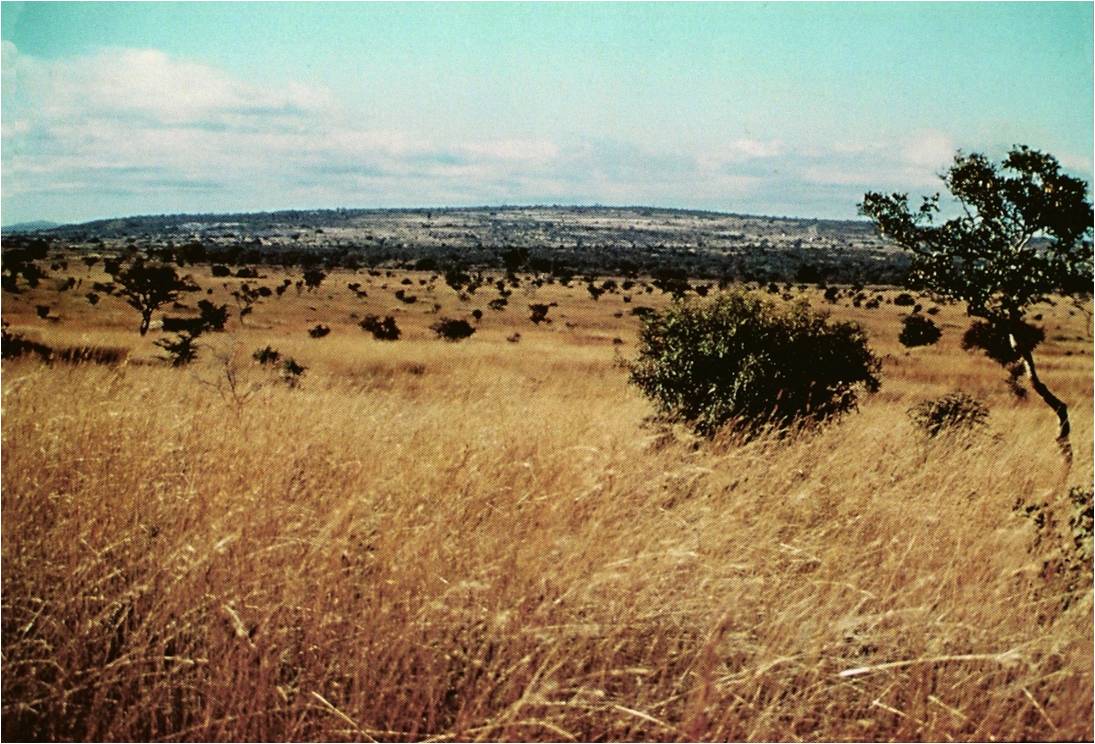 |
| Savanna |
The minerals that they mine in Zambia include Limestone, Sand, Phosphate, Coal, and Feldspar. Most of the energy that Zambia uses comes from hydroelectric power plants. Some parts of Zambia have fertile soil, while others don’t. Industries in Zambia include mining, construction, chemicals, and fertilizers.
Laos Global Relationships
After the collapse of the Soviet Union, Laos realized that they needed to become friendlier with their bordering countries. The effort to become friendly resulted in gaining allies such as China, the United States, Vietnam, and Thailand. Laos is part of many organizations, some of them are the SouthEast Asian Nations, World Tourism Organization, and the United Nations.
Tuesday, June 11, 2013
Laos People and their Environment
The major concerns about the environment of Laos is that there is unexploded bombs from the Vietnam war, deforestation, soil erosion, and non drinkable water. There is a concern about unexploded bombs because if they go anywhere close to them they might get set off. Also, deforestation is a huge problem because we need trees to live, it also destroys animals habitats. Also, soil erosion is a main problem because agriculture is their main source of income and if all the soil erodes then there would be no more crops. Although all the concerns I talked about are huge, but the main concern is that there is no no drinking water. If there is no drinking water then people will die of thirst or get sick from the contaminated water that they drink. All of these concerns are challenges for the future.

Laos Economy
Laos is considered a poor country that has a socialist republic economy. The economy is growing very quickly, but it’s still considered bad. The main employment in Laos is agriculture, it employs about 80 percent of the people. The crops that are grown are rice, vegetables, tobacco, and coffee. The main industries are mining, timber, electric power, and tourism(Culture Grams).
In the rural areas most people walk, bike, or ride a motorcycle to get from place to place. However, in the city most of the people use cars. In the cities there is public transportation like buses, wagons, and pick up trucks. Also, the Mekong river is used to transport people and goods, but not many people use it anymore. People in Laos use telephones to communicate with one another.


In the rural areas most people walk, bike, or ride a motorcycle to get from place to place. However, in the city most of the people use cars. In the cities there is public transportation like buses, wagons, and pick up trucks. Also, the Mekong river is used to transport people and goods, but not many people use it anymore. People in Laos use telephones to communicate with one another.


Laos History and Governemnt
Laos was officially a country in 1897 when the French took several different territories and combined them to make it. In 1984 Japan took over Laos at the end of World War II, but then it was regained by the French. In 1949, French made Laos an independent state under the French Union. In 1953, Laos gained full independence as a constitutional monarchy with a king as a ruler. In 1955, Laos got accepted into the United Nations. During the 1960’s and 70’s the United States bombed Laos in intent to cut off supplies. In 2012, the started developing the first hydroelectric plant on the Mekong River.
 |
| Hydro electric plant |
Laos Population and Culture
The population of Laos is 6.7 million. About 4,690,000 of the 7 million people live in rural areas especially the capital Vientiane. The largest ethnic group in Laos is the Lao Loum who are native to northeastern Thailand. Also, other nationalities like Chinese and Vietnamese live in Laos.
The official language of Laos is Lao, but other ethnic groups speak differently. The most commonly learned language is english, mostly only people in urban places speak it. The main religion in Laos is Buddhism because they are located in Asia. People in Laos take religion very seriously, most people practice it everyday. Even people that aren’t very religious still worship at temples and dress up for various festivals. Believers in Buddhism follow the four main virtues; metta which means loving kindness, Karunna which means compassion, mudhita which means sympathetic, and uppekkha which means equanimity(Culture Grams). Something cool about Buddhist males are that at one time in their lives they will probably serve at a temple as a monk. Other religions include animists, who believe every living thing has a right to live, Muslim, and Christian.
Children in Laos start primary learning at the age of six, they are taught reading, writing, math, and culture. Even though school is mandatory, education is not great, the teachers get low pay, and schools are unsanitary. After primary school which lasts five years you can choose to continue on to secondary school which teaches advanced math, science, history, geography, and english. Kids who complete this schooling can go on to college but most don’t because they can’t afford it.
Healthcare in Laos is not good at all. Hospitals don’t have a lot of workers or supplies to deal with patients. Even though healthcare is poor it’s still expensive to go so that’s why poor families often die of preventable diseases.
Families in Laos on average have four or five kids. Families are usually larger in rural areas because the more kids you have the more workers on the farm. Three generations live with one another because they can’t afford anything else. Although it seems like a lot of people in one house they like it because it brings them closer together and work gets done faster. Children are taught to honer their parents and to do whatever they are told to do. The men in the household are usually the workers and the people who provide for their family, on the other hand women stay at the home and tend for their kids. Soccer is the main sport of Laos, many kids and adults play on teams to have fun.
Food in Laos consists of rice and vegetables. When they have dinner they do not sit on a stool, instead they eat on a mat. The most popular music in Laos is the Lao folk music, but they also listen to American music.
The official language of Laos is Lao, but other ethnic groups speak differently. The most commonly learned language is english, mostly only people in urban places speak it. The main religion in Laos is Buddhism because they are located in Asia. People in Laos take religion very seriously, most people practice it everyday. Even people that aren’t very religious still worship at temples and dress up for various festivals. Believers in Buddhism follow the four main virtues; metta which means loving kindness, Karunna which means compassion, mudhita which means sympathetic, and uppekkha which means equanimity(Culture Grams). Something cool about Buddhist males are that at one time in their lives they will probably serve at a temple as a monk. Other religions include animists, who believe every living thing has a right to live, Muslim, and Christian.
Children in Laos start primary learning at the age of six, they are taught reading, writing, math, and culture. Even though school is mandatory, education is not great, the teachers get low pay, and schools are unsanitary. After primary school which lasts five years you can choose to continue on to secondary school which teaches advanced math, science, history, geography, and english. Kids who complete this schooling can go on to college but most don’t because they can’t afford it.
Healthcare in Laos is not good at all. Hospitals don’t have a lot of workers or supplies to deal with patients. Even though healthcare is poor it’s still expensive to go so that’s why poor families often die of preventable diseases.
Families in Laos on average have four or five kids. Families are usually larger in rural areas because the more kids you have the more workers on the farm. Three generations live with one another because they can’t afford anything else. Although it seems like a lot of people in one house they like it because it brings them closer together and work gets done faster. Children are taught to honer their parents and to do whatever they are told to do. The men in the household are usually the workers and the people who provide for their family, on the other hand women stay at the home and tend for their kids. Soccer is the main sport of Laos, many kids and adults play on teams to have fun.
Food in Laos consists of rice and vegetables. When they have dinner they do not sit on a stool, instead they eat on a mat. The most popular music in Laos is the Lao folk music, but they also listen to American music.
 |
| Buddhist Temple |
Laos Climate and Vegetation
Laos’s climate is tropical monsoon that has temperatures that range from the 50s to the 90s. It has two seasons a dry season from October to April and a rainy season from May to September. In January temperatures are at the lowest, and in April there at the highest. The monsoons happen usually at the same time every year in each country a monsoon is a rainy season. The agriculture in Laos used to be fantastic but ever since bombs were dropped on them during the Vietnam war it hasn’t been the same. The crops that they can produce are rice, sweet potatoes, sugarcane, corn, and some fruits.
 |
| Planting Rice |
 | |
| Monsoon |
Laos Geography

 Laos is located in Southeastern Asia, northeast of Thailand, and west of Vietnam(Cia World Factbook). Laos is a very hilly Country that also has thick green forests and many mountains. One of the mountains is the Doi Phi Pan Nam, this mountain is 1.745 meters high and it’s part of the Luang Prabang Range. It represents a border between Laos and Thailand. Also, Laos has a wide variety of rivers, but one in particular is the Mekong. The Mekong river provides food, water, and transportation for more then 60 million people. It provides necessities because it’s the 12th longest river in the world at 4,350 km long. Another cool fact about this river is that it supports the second most fish in the world, the Amazon is the first. The tributaries of Laos are a huge source of hydroelectric power.
 Teak and mahogany come from the tropical forests in Laos. Like I said before hydroelectric plants make up for 94% of their electricity. The minerals that are produced in Laos include barite, limestone, clay, coal, copper, gemstones, gold, gypsum, rock salt, silver, tin, and zinc (The Mineral Industry of Laos). The main problem with the soil in Laos is erosion, but the soil still supports many crops. The industries in Laos include agriculture, mining, timber, electric power, construction, and tourism(Laos Industries).
Brazil's Fun Facts
Estimates state that a piece of the rainforest the size of two football fields disappear every second. They disappear due to loggers cutting down trees to sell, farmers who cut down trees for their farms and cattle, and miners who cut down trees to mine for minerals(brazil.org)
When you are invited to dinner or a gathering never dress too casual, they would rather have you over dress.
Always bring the hostess a small gift.
Never give anyone a gift that is black or purple because they are looked at as sad colors.
Arrive early to dinner or gathering.
When you are invited to dinner or a gathering never dress too casual, they would rather have you over dress.
Always bring the hostess a small gift.
Never give anyone a gift that is black or purple because they are looked at as sad colors.
Arrive early to dinner or gathering.
Brazil's Global Relationships
Brazil has some very big problems with their surrounding countries. One of them is that there is a dispute between Brazil and Uruguay over the Braziliera island as too who owns right to it. Also, another issue between Uruguay and Brazil is the smuggling of guns and drugs across there borders, Brazil has the same problem with
Venezuela. Drugs are one of the main problems in Brazil, they are the
second largest consumer of cocaine, and they grow and sell cannabis.
Most of the world aren’t enemies with Brazil because they have a lot of allies including, the United States, the EU, and most of Africa in particular the Portuguese speaking countries. Since Brazil has so many powerful allies many countries are afraid of being enemies of Brazil, although Argentina is a enemy. They are enemies because of the drug cartels and other political reasons. As we are speaking they are trying to resolve their problems.

Most of the world aren’t enemies with Brazil because they have a lot of allies including, the United States, the EU, and most of Africa in particular the Portuguese speaking countries. Since Brazil has so many powerful allies many countries are afraid of being enemies of Brazil, although Argentina is a enemy. They are enemies because of the drug cartels and other political reasons. As we are speaking they are trying to resolve their problems.

Brazil's People and their Environment
Deforestation in Brazil is one of their biggest problems, it destroys habitats and kills of a lot of animal and plant species that were indigenous to the Basin. There is also a illegal wildlife trade, it poses a threat because it endangers the animals. Also, in major cities there is major air and water pollution caused by improper mining. Challenges for the future are to stop deforestation, lessen air and water pollution, and take control of the illegal wildlife trade. If the Brazilian people want their country to stay beautiful then they better start making changes.


Subscribe to:
Posts (Atom)